


Table Of Contents 1 What is root canal treatment? 2 Can a tooth need root canal treatment with no pain at all? 3 7 symptoms that may mean you need...
Signs You Need a Root Canal: 7 Symptoms You Should Never Ignore
30th Apr 2026
Table Of Contents
Tooth pain is one of the most difficult things to ignore, yet many people do exactly that. They hope it will settle on its own, manage it with painkillers for a few days, or put off seeing a dentist because they are worried about what they might be told.
At Eccleshill Dental in Bradford, one of the most common situations we see is a patient who has had a symptomatic tooth for weeks or months before coming in. In many of those cases, earlier treatment would have been simpler, quicker, and less costly than what became necessary by the time they arrived.
This post explains the seven symptoms that may indicate you need root canal treatment, why each one matters clinically, and what happens if an infected tooth is left without treatment. If you recognise any of these symptoms, the right next step is to book a dental examination so the tooth can be properly assessed.

What this post covers
- What root canal treatment is, in plain language
- Why a tooth can need root canal treatment with no obvious pain at all
- The 7 symptoms worth taking seriously
- What happens clinically if an infected tooth is left untreated
- When to seek urgent care
- What to do next if you recognise any of these signs
What is root canal treatment?
Before looking at the symptoms, it is worth understanding what root canal treatment actually involves, because much of the anxiety around it comes from misunderstanding the procedure.
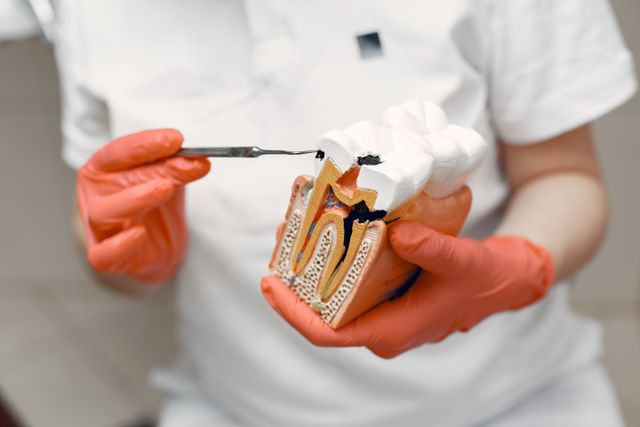
Every tooth contains a soft tissue at its centre called the dental pulp. The pulp sits inside a space called the pulp chamber and extends down through narrow channels called root canals, which run to the tip of each root. The pulp contains nerves, blood vessels, and connective tissue. It plays a role in tooth development, but once a tooth is fully formed, it can function normally without it.
When bacteria penetrate deeply into a tooth, through decay, a crack, or a fracture, they can infect the dental pulp. The pulp becomes inflamed and, if left untreated, eventually dies. The infection then spreads beyond the root tip into the surrounding bone.
Root canal treatment, also called endodontic treatment, is the process of removing the infected or inflamed pulp, cleaning and disinfecting the root canal system, and sealing it to prevent re-infection. The outer structure of the tooth is preserved. Posterior teeth such as molars and premolars are usually restored with a crown afterwards to protect the weakened structure. Front teeth are often restored with a filling, depending on how much tooth structure remains.
At Eccleshill Dental, root canal treatment takes between 60 and 150 minutes and is carried out under local anaesthetic. Most patients find it far more comfortable than they expected.
Can a tooth need root canal treatment with no pain at all?
Yes, and this is one of the most important things to understand.
When the dental pulp first becomes inflamed, it typically causes pain. But if the pulp dies completely, the nerve tissue is no longer alive to transmit pain signals. The infection continues to progress and spread into the surrounding bone, but the patient may feel little or nothing during this phase.
This is why some patients come to our Bradford practice with a significant abscess visible on an X-ray but minimal current pain. The absence of pain does not mean the tooth is healthy. It may mean the nerve has died and the infection is now deeper.
Some teeth can also show changes on a dental X-ray before any symptoms develop at all. This is one reason why regular dental examinations, including X-rays, matter even when nothing feels wrong.
7 symptoms that may mean you need root canal treatment
None of these symptoms alone is a definitive diagnosis. Root canal treatment is diagnosed by a dentist following a clinical examination and X-rays. But each of the following is a signal worth taking seriously.
1. Persistent toothache that does not settle
Pain that lasts for more than a few days, particularly pain that is present without any obvious trigger, is one of the most common indicators of pulp inflammation or infection. The pain from an inflamed or infected pulp is often described as a deep, throbbing ache that can come and go or be constant. It can radiate to the jaw, ear, or nearby teeth, making it difficult to identify exactly which tooth is the source. Any toothache that persists beyond a couple of days, returns repeatedly, or cannot be explained by something obvious should be assessed by a dentist.
2. Sensitivity to heat or cold that lingers
Brief sensitivity to cold is common and not always a cause for concern. What is clinically significant is sensitivity that lingers for more than 10 to 15 seconds after the stimulus has been removed, or sensitivity to heat. When a healthy pulp is exposed to cold, the sensation passes quickly. An inflamed pulp continues to respond long after the stimulus is gone. Sensitivity to heat in particular is often associated with more advanced pulp inflammation or pulp that is beginning to die. If hot food or drink is causing pain that lingers for more than a few seconds, report it to your dentist.
3. A tooth that has become noticeably darker than those around it
A tooth that has turned grey, has a brownish tinge, or looks noticeably darker than the teeth beside it can indicate that the dental pulp is dying or has died. When the pulp breaks down, red blood cells from the dying tissue release haemoglobin, which breaks down further into iron compounds. These compounds penetrate the tiny channels inside the dentine, called dentinal tubules, and discolour the tooth from within. This discolouration develops gradually and can be easy to overlook. It is worth noting if a tooth that was previously a normal colour has changed over time. Discolouration of a single tooth is a clinical sign that a dentist needs to assess with X-rays.
4. Swelling of the gum near a specific tooth (seek care promptly)
Swelling of the gum tissue near a particular tooth, especially if it is tender to touch, can indicate that infection is spreading from the root tip into the surrounding tissue. In some cases a small raised bump or spot appears on the gum, called a sinus tract or a gum boil. A sinus tract is a channel the body has formed to allow pus from an abscess to drain. Its presence is a clear sign that active infection is present around the root. Even if the sinus tract appears to drain and temporarily resolve on its own, the underlying infection does not clear without treatment. A gum boil near any tooth should be assessed promptly.
5. A persistent bad taste or bad breath from one area
A persistent unpleasant taste in the mouth, or bad breath that remains despite good oral hygiene, can sometimes be caused by an infected tooth draining bacteria and pus into the mouth. This is particularly relevant when the bad taste or smell can be localised to a specific area rather than being general. Pus from a dental abscess has a distinct unpleasant taste. If you can trace an unusual taste or smell to one part of the mouth, especially if other symptoms on this list are also present, it warrants a dental examination.
6. Pain or discomfort when biting or applying pressure to a tooth
A tooth that is painful when you bite down on it, or that feels uncomfortable when you press on it, can indicate inflammation in the tissues surrounding the root tip. This condition is called apical periodontitis, which is inflammation of the periodontal tissue at the apex of the root. It can occur both when the pulp is severely inflamed and alive, and as infection spreads beyond a pulp that has already died. The affected tooth may feel as though it sits slightly higher than the surrounding teeth, or feel subtly different when you bite. Even occasional discomfort on biting from a specific tooth is worth checking.
7. A tooth that has already had significant dental work and is now causing problems
A tooth that has had a filling, crown, or even a previous root canal treatment can still develop problems. Decay can develop beneath an existing filling or crown and eventually reach the pulp. A previous root canal can fail if bacteria recolonise the root canal system over time, or if the final restoration did not adequately seal the tooth. If a tooth with a history of significant dental work is now causing pain, sensitivity, swelling, or any of the other symptoms on this list, it needs to be assessed. Prior treatment does not make a tooth immune to new problems.
What happens if an infected tooth is left untreated?
A tooth infection does not resolve on its own. The bacteria causing the infection do not disappear without treatment. Without intervention, an infected tooth follows a progression that becomes increasingly difficult and more expensive to manage the longer it continues.
In the early stages, infection is contained within the pulp and root canal system. Root canal treatment at this point is straightforward and has a good success rate. The tooth can usually be saved without significant complications.
As the infection progresses, it spreads through the root tip into the surrounding bone, causing a dental abscess. This stage involves more significant pain and can cause visible facial swelling. Antibiotics are often needed to bring the infection under control before definitive dental treatment can take place.
If left further still, the infection destroys surrounding bone to the point where saving the tooth becomes impossible and extraction is the only option. If a tooth needs to be extracted, it then needs to be replaced to prevent the remaining teeth from shifting. Replacement options at Eccleshill Dental include dental implants, a dental bridge, or a denture, each of which involves additional treatment and cost.
In the most severe cases, dental infections can spread into the soft tissues of the jaw, face, and neck. This is a medical emergency requiring urgent hospital treatment.
The straightforward point is this: a tooth showing early warning signs and treated promptly has a much better outcome, at lower cost and with less discomfort, than one left to deteriorate.
When to seek urgent care
If you have any of the following, do not wait for a routine appointment. Contact Eccleshill Dental on 01274 633 406, or call NHS 111 if we are closed:
- Facial swelling that is spreading, particularly around the eye, under the jaw, or down the neck
- Difficulty swallowing or opening your mouth
- Difficulty breathing
- A high temperature combined with severe dental pain
These can indicate a spreading infection that requires prompt medical attention, not just dental care.
What to do if you recognise any of these symptoms
If you have identified one or more of these symptoms, book a dental examination. A dentist cannot diagnose a tooth problem from a description of symptoms alone. The assessment requires a clinical examination, tests of the tooth’s response to stimuli, and X-rays to assess the condition of the root and surrounding bone.
Do not rely on painkillers to manage the situation long term. They can reduce the discomfort, but they do not treat the infection. A tooth infection that is masked by pain relief continues to progress.
If you are worried about what root canal treatment involves, it is worth knowing that the procedure is carried out under local anaesthetic. You should not feel pain during the treatment. The pain people associate with root canal treatment is almost always the pain caused by the infection before treatment, not the treatment itself. Many patients tell us it was far more straightforward than they expected.
Root canal treatment at Eccleshill Dental, Bradford
Root canal treatment at our Bradford practice takes between 60 and 150 minutes and starts from £549. Membership plan patients receive a 20% discount. We also offer 0% finance, allowing the cost to be spread over monthly payments.
If you are nervous about dental treatment, we offer sedation at Eccleshill Dental and our team has extensive experience in supporting anxious patients. You will not be judged for having avoided the dentist, and there is no pressure to proceed with anything until you are fully ready.
Wondering what root canal treatment actually involves?
If reading this post has raised questions about what the procedure involves, how long it takes, and whether it hurts, we cover all of that in our guide to root canal treatment at Eccleshill Dental. Most patients find it significantly more comfortable than they expected.
Book a dental examination at Eccleshill Dental, Bradford
If you have a symptomatic tooth and would like it assessed, we are accepting new patients at our Bradford practice. We offer same-day emergency appointments for patients in pain.
Root canal treatment: eccleshilldental.co.uk/treatments/general-dentistry/root-canal-treatment/
Book an appointment: eccleshilldental.co.uk/contact/
Call us: 01274 633 406
Email: info@eccleshilldental.com
WhatsApp: 07741 503259
Membership plan patients receive 20% off root canal treatment. 0% finance is also available. See our fees page for full details.