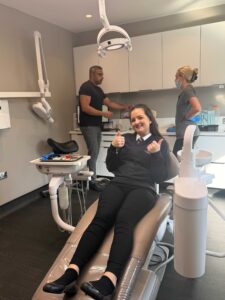


Dental Sedation Bradford

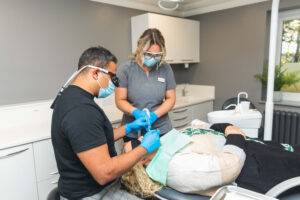
Dental sedation uses medication to help anxious patients undergo treatment calmly and comfortably. At Eccleshill Dental in Bradford, we provide intravenous sedation, known as IV sedation, which is the most effective and reliable form of conscious sedation used in UK dental practice. Under IV sedation you remain conscious and able to respond to your dentist, but you feel deeply relaxed and typically remember little of the treatment afterwards. A local anaesthetic keeps the procedure completely pain-free. Because the sedative affects you for several hours, you must be escorted home by a responsible adult and must not drive for 24 hours.
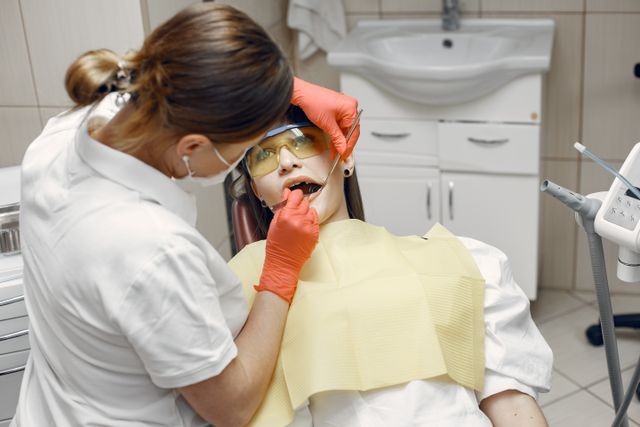
IV dental sedation for nervous patients in Bradford - Eccleshill Dental

What Does Being Sedated at the Dentist Actually Involve?

Conscious sedation involves the use of a sedative medication to produce a relaxed, calm state during dental treatment, while you remain conscious and able to respond to your dentist throughout. It is defined in UK clinical guidance as a technique carrying a wide enough margin of safety that loss of consciousness is unlikely.

Conscious sedation is quite different from general anaesthesia. Under general anaesthesia you are fully unconscious and need breathing support. Under conscious sedation you stay awake, breathe on your own, and keep verbal contact with the dental team at all times. The purpose is not to put you to sleep but to lift the anxiety that makes treatment difficult, so that care you may have been putting off becomes manageable.

Sedation is particularly valuable for patients with significant dental anxiety or a dental phobia, those with a strong gag reflex, and anyone facing a longer or more complex procedure. It works alongside a local anaesthetic rather than replacing it, so the area being treated is fully numbed while the sedation keeps you relaxed. If dental fear has kept you away from the chair, sedation offers a way back to the care your teeth need.

What Are the Main Ways to Be Relaxed for Treatment?

There are three main methods of conscious sedation in UK dentistry: intravenous sedation given through a vein, oral sedation taken as a tablet, and inhalation sedation breathed in as a gas. Eccleshill Dental provides IV sedation, the most reliable and controllable option, and the other methods are described here for comparison.

Intravenous sedation: A sedative is delivered directly into a vein through a fine cannula, usually in the back of the hand or the forearm. It acts quickly, can be adjusted precisely during treatment, and produces the deepest and most reliable level of conscious sedation. This is the method we offer at Eccleshill Dental.

Oral sedation: A sedative tablet is taken before the appointment. It is simple to take and avoids a needle, but the effect is slower to begin, cannot be adjusted once taken, and is generally milder and less predictable than the intravenous route.

Inhalation sedation: A mixture of nitrous oxide and oxygen, sometimes called happy air or laughing gas, is breathed in through a small nose mask. It is the mildest option, wears off quickly, and is often used for milder anxiety.

During your consultation, your dentist discusses your level of anxiety, the treatment you need, and your medical history before confirming that IV sedation is suitable and explaining exactly what to expect.

How Does Intravenous Relaxation Work During Treatment?

A fine tube called a cannula is placed into a vein in the back of your hand or forearm, and a sedative medication is given through it. It is a short-acting sedative that produces deep relaxation within about 60 to 90 seconds. The dose is built up gradually and tailored to your response.

The sedative works by enhancing the effect of a natural calming signal in the brain, producing rapid and reliable relaxation. Because it is given directly into the bloodstream, it takes effect quickly, and your dentist can add small amounts gradually until you are comfortably relaxed. This gradual, tailored approach is called titration, and it means the level of sedation is matched to you rather than to a fixed dose.

A helpful feature of this sedative is that it usually causes a degree of memory loss for the period of treatment. Most patients recall very little of the procedure afterwards, and many describe time as having passed very quickly. This is often a relief for anxious patients, who avoid building up further difficult memories of dental treatment. A numbing cream is applied before the cannula is placed, so the needle is barely felt.

Will You Be Unconscious or Aware Throughout?

You remain conscious throughout IV sedation. You are able to breathe on your own, keep your airway open, and respond to your dentist. What changes is your perception: you feel deeply relaxed and detached from the treatment, and the memory-loss effect means most patients remember little or nothing of the procedure afterwards.

Some websites describe IV sedation as sleep dentistry or twilight sleep. These terms are misleading, because they suggest you are unconscious, which is not the case with conscious sedation. You stay awake and responsive throughout, even though you may feel as though you have drifted through the appointment.

The combination of feeling deeply relaxed and remembering little is what makes IV sedation so effective for anxious patients. You are aware enough to cooperate with your dentist and to respond if asked, yet detached enough that the sights, sounds, and sensations that normally cause anxiety no longer trouble you. For many people who have avoided treatment for years, this is the difference that finally allows them to proceed.

Is Being Sedated Safe?

Yes. IV sedation has an excellent safety record when administered by a sedation-trained clinician in a properly equipped practice. Throughout treatment, your blood pressure, pulse, and oxygen levels are continuously monitored using the same kind of equipment used in hospitals. Serious complications are rare when sedation is delivered to UK clinical standards.

The sedative we use has been used safely in UK dental practice for decades. Its safety comes from the careful, monitored way it is delivered. Before sedation begins, your dentist measures your baseline blood pressure, pulse, and oxygen levels. Throughout the procedure, these are watched continuously using painless monitoring devices, so any change is noticed and managed immediately.

As with any medical procedure, there are some risks, although they are rare. These can include a temporary drop in oxygen levels or effects on breathing or heart rate, which is precisely why continuous monitoring and a sedation-trained team matter. The practice is equipped to manage such situations, and the sedative used can be reversed with medication if needed. This is why sedation should only ever be provided by clinicians with specific postgraduate training in sedation, as it is at Eccleshill Dental.

Which Option Is Strongest, and How Do They Compare?

Intravenous sedation is the strongest and fastest-acting of the three methods. It offers the quickest onset and the greatest reduction in anxiety, which is why it is widely preferred for significant dental anxiety. Oral sedation tends to have fewer side effects but a slower, milder effect, while inhalation sedation sits between the two.

The comparison below explains why IV sedation is the preferred choice for significant anxiety.

Method Onset Strength of effect Best suited for
Intravenous Fastest, around 3 to 4 minutes Strongest and most controllable Significant anxiety or phobia, complex or long treatment
Inhalation Around 5 minutes Mild, wears off quickly Mild anxiety, routine treatment
Oral Slowest, around 10 to 15 minutes Mild to moderate, fewer side effects Moderate anxiety, needle-averse patients

IV sedation is generally the most effective at reducing anxiety, while oral sedation offers a gentler side-effect profile. For patients whose anxiety is severe enough to have kept them from the dentist, the speed, strength, and precise control of IV sedation make it the most dependable route to comfortable treatment.

Who Is Suitable for This Approach?

Most healthy adults are suitable for IV sedation. It is particularly helpful for people with significant dental anxiety or phobia, a strong gag reflex, or a need for complex or lengthy treatment. Some medical conditions and medications mean it may not be suitable, which your dentist checks carefully before recommending it.

IV sedation is well suited to several situations. It helps patients whose anxiety or phobia would otherwise prevent them from accepting treatment. It helps those with a strong gag reflex, which sedation significantly reduces. It also makes lengthy or complex procedures, such as surgical extractions or implant placement, far more manageable by allowing them to be completed comfortably in fewer visits.

Suitability is always confirmed individually. At your consultation, your dentist reviews your full medical history and current medications, because some health conditions and certain medicines can make IV sedation less suitable. Where that is the case, your dentist will explain the reasons and discuss the alternatives available to you. Pregnancy, certain respiratory and liver conditions, and some medications are examples of factors that need careful assessment. This is why no one is sedated without a thorough prior check.

How Should You Prepare Before Your Appointment?

Arrange for a responsible adult to escort you home and stay with you for 24 hours. Eat normally but lightly beforehand unless your dentist advises otherwise, and avoid alcohol. Wear comfortable clothing with sleeves that roll up easily, remove nail varnish, and bring a list of your regular medications. Your dentist will give you personalised instructions.

Arrange your escort. You must have a responsible adult to take you home and stay with you for 24 hours. Without an escort, the sedation cannot go ahead. Your escort should not be responsible for caring for anyone else, such as young children, during that time.

Eating and drinking. Current UK guidance for conscious sedation does not normally require you to fast. Eat a light meal beforehand unless your dentist specifically tells you otherwise, and avoid large meals and alcohol. Your dentist will give you clear personal instructions.

Clothing and preparation. Wear comfortable clothing with sleeves that can be rolled up for monitoring and the cannula. Wear flat shoes, avoid make-up and nail varnish so your oxygen levels can be monitored accurately, and consider glasses rather than contact lenses.

Medications. Bring a current list of all your medications, and continue taking your regular prescriptions as normal unless your dentist advises otherwise.

Travel. Plan to travel home by private car or taxi with your escort, not on public transport.

What Happens on the Day, Step by Step?

On arrival, your dentist checks your blood pressure, pulse, and oxygen levels. A numbing cream is applied and a fine cannula placed in your hand or arm. The sedative is given gradually until you are relaxed, your treatment is carried out under local anaesthetic, and you then recover under supervision before going home with your escort.

Here is what to expect on the day at Eccleshill Dental:

Pre-treatment checks. Your dentist records your baseline blood pressure, pulse, and oxygen levels, and confirms your escort is present and that you are ready to proceed.

Placing the cannula. A numbing cream is applied to the back of your hand or your forearm, then a fine cannula is placed into a vein. The numbing cream means you should feel little or nothing.

Gradual sedation. The sedative is introduced slowly and built up in small amounts until you feel calm and comfortably relaxed. You remain conscious and able to respond throughout.

Your treatment. Once you are relaxed and the area is numbed with local anaesthetic, your dentist carries out the treatment. You will be monitored continuously the entire time.

Recovery. After treatment you rest in a recovery area under supervision until you are steady enough to leave. Your escort then takes you home.

The whole experience is designed to feel calm and unhurried. Because of the memory-loss effect, the treatment itself will likely seem to have passed in a few minutes, even if it took much longer.

What Is Recovery Like Afterwards?

You will feel drowsy and a little unsteady for the rest of the day, and your judgement may be affected for up to 24 hours. During that time you must not drive, cycle, operate machinery, drink alcohol, or make important decisions. Your escort should stay with you throughout. Most people feel back to normal the next day.

The effects of the sedative wear off gradually over the following hours, but they may not clear entirely for 24 hours. It is normal to feel sleepy, a little dizzy, or forgetful during this period. Rest at home for the remainder of the day, and let your escort look after you.

For the 24 hours after IV sedation, you should not drive a vehicle, ride a bicycle, operate machinery or household appliances, drink alcohol, or sign documents or make important decisions, as your judgement and coordination remain affected even once you feel recovered. If you have had a procedure such as an extraction, your dentist will also give you specific aftercare instructions for that treatment. You will be given a contact number in case you have any concerns once you are home. Most patients feel completely back to normal by the following day.

Which Treatments Can Be Carried Out Under Sedation?

Almost any dental treatment can be carried out under IV sedation. It is especially useful for procedures that anxious patients find difficult, such as tooth extractions, surgical procedures, and implant placement, and for longer treatments or several procedures completed in one visit. Even routine care can be provided under sedation for very anxious patients.

Sedation is most often used where anxiety or procedure complexity would otherwise be a barrier. A tooth extraction, particularly a surgical one, is a common example, as is implant placement or any longer course of treatment that benefits from being completed comfortably in a single visit. Sedation also helps patients with a strong gag reflex tolerate treatment that would otherwise be very difficult.

For patients whose anxiety is severe, even routine treatment such as fillings or a thorough examination and clean can be carried out under sedation, providing a way to restore oral health that fear had made impossible. If you have a dental emergency and are anxious about treatment, our team can discuss the options with you. Your dentist will always confirm which approach is right for your particular treatment and circumstances.

How Much Does Sedation Add to the Cost of Treatment?

IV sedation is an additional cost on top of the dental treatment itself, reflecting the sedation-trained clinician, the monitoring, and the additional appointment time involved. The exact cost depends on the length and complexity of your treatment and is confirmed following your consultation at Eccleshill Dental.

Because sedation requires specialist training, dedicated monitoring, and longer appointment times, it is charged in addition to the cost of the dental treatment being carried out. The amount varies according to how long and how complex the treatment is, as this affects the sedation time required.

At Eccleshill Dental, all costs are explained and confirmed before treatment begins, in line with our Fair Price Charter, so you will know exactly what to expect with no hidden charges. Finance options are available to help spread the cost of treatment, including sedation, into manageable monthly payments. For many anxious patients, sedation is what finally makes essential treatment achievable, and we are happy to discuss the cost openly at your consultation.

Why Choose Eccleshill Dental in Bradford for Sedation?

At Eccleshill Dental in Bradford, IV sedation is provided by a trained clinical team with continuous monitoring, following a thorough consultation to confirm it is right for you. We have long experience of caring for anxious and phobic patients, and we take the time to explain every step so you feel informed and in control.

We understand how real and how isolating dental anxiety can be, and we never judge anyone for how long it has been since their last visit. Our focus is on making treatment possible in a calm, supportive, and unhurried way. Before any sedation, we carry out a full consultation to review your medical history, discuss your anxieties, and confirm that IV sedation is safe and suitable for you.

Our wider support for anxious patients is set out on our nervous patients page, and sedation sits alongside the gentler measures we use to help people feel at ease. If it has been a long time since you last saw a dentist, a simple dental examination, with sedation if you need it, is a gentle place to begin. All costs are confirmed in advance under our Fair Price Charter, with finance options available.


Book a Sedation Consultation in Bradford

If dental anxiety has been keeping you from the treatment you need, IV sedation could be the answer. Contact our Bradford team to arrange a consultation, where we will discuss your concerns, review your medical history, and explain how sedation can make your treatment calm and comfortable. We are accepting new patients.

There is no need to feel embarrassed or to explain your fear in detail before you arrive. Simply let us know that you are an anxious patient when you get in touch, and we will take care of the rest. Taking that first step is often the hardest part, and our team is here to make everything that follows as easy as possible.

Call us: 01274 633 406

Email: info@eccleshilldental.com

WhatsApp: 07741 503259

Eccleshill Dental, Rillington Mead, Bradford BD10 0ED
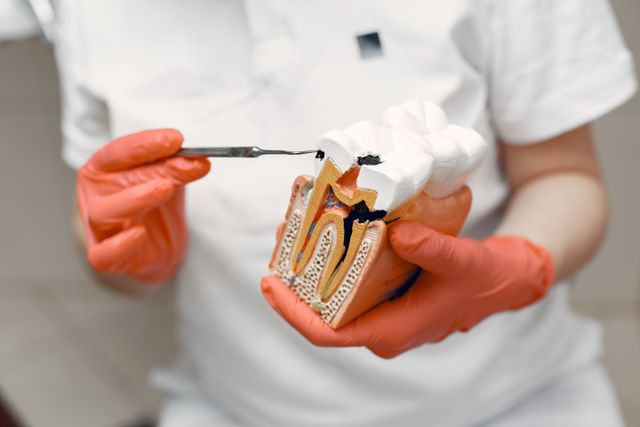
How much does root canal treatment cost in Bradford?

Root canal treatment at Eccleshill Dental in Bradford costs from £549 for members and from £686.25 for private patients. The exact price depends mainly on which tooth needs treatment, as a front tooth with a single canal is more straightforward than a molar with three or four canals. Treatment typically takes between 60 and 150 minutes and is carried out under local anaesthetic. In this guide we explain what affects the cost, why a back tooth usually needs a crown afterwards, how root canal compares to having the tooth taken out, whether it is available on the NHS, and how to spread the cost using our 0% finance option.

How Much Does Root Canal Treatment Cost in Bradford - Eccleshill Dental guide

What this post covers

  • The root canal treatment price at Eccleshill Dental Bradford
  • Why the cost varies from tooth to tooth
  • Whether a crown is needed afterwards and what that costs
  • Whether it is cheaper to have the tooth extracted instead
  • Whether root canal treatment is available on the NHS
  • What happens if you delay treatment because of cost
  • How to spread the cost with 0% finance

What Does Root Canal Treatment Cost at Eccleshill Dental in Bradford?

At Eccleshill Dental our root canal pricing is transparent and published on our fees page. Root canal treatment is a procedure that removes infected or damaged pulp, the soft tissue containing the nerve and blood vessels at the centre of the tooth, then cleans, disinfects, and seals the canals to prevent further infection.

Treatment Members’ fee Private fee Treatment time
Root canal treatment (from) From £549.00 From £686.25 Typically 60 to 150 minutes

This is a starting price. Your exact cost is confirmed at your consultation after a clinical examination and X-rays, because the final fee depends on which tooth is being treated and how complex the case is. We will always provide a written treatment plan and quotation before any treatment begins, as part of our commitment to the Fair Price Charter.

We offer 0% APR finance on root canal treatment, allowing you to spread the cost over monthly payments with no interest added. Finance is arranged through Medenta Finance Limited, authorised and regulated by the Financial Conduct Authority (No: 715523).

Why Does the Cost of a Root Canal Vary From Tooth to Tooth?

The single biggest factor that determines the cost of root canal treatment is which tooth needs treating. This is not arbitrary. It reflects a genuine difference in how much clinical work each tooth requires.

Each tooth contains one or more narrow channels called root canals, which run from the centre of the tooth down to the tip of each root. Every canal has to be individually located, cleaned, shaped, and sealed. The more canals a tooth has, the more time, skill, and precision the treatment takes.

  • Front teeth (incisors and canines) usually have a single root canal. They are the most straightforward to treat and sit at the lower end of the price range.
  • Premolars typically have one or two canals, making them slightly more involved than front teeth.
  • Molars at the back of the mouth usually have three or four canals, sometimes more. They take the longest and require the greatest precision, so they sit at the higher end of the range.

Other factors that can affect the final cost include whether the canals are curved or narrowed, and whether the tooth has had a previous root canal that now needs re-treatment, which is more complex than treating a tooth for the first time.

Does a Root Canal Need a Crown Afterwards, and What Does That Cost?

This is one of the most important things to understand before treatment, because it affects the total cost and many patients are not told about it upfront.

After root canal treatment, the tooth no longer has a living blood supply. Over time this can make the tooth more brittle and more prone to fracture. For this reason, back teeth such as premolars and molars usually need a dental crown fitted afterwards to protect the tooth and reinforce its structure. Front teeth, which bear less biting force, can sometimes be restored with a filling instead.

Treatment Members’ fee Private fee
Crown (from) From £552.43 From £689.54

The crown is usually fitted at a separate appointment after the root canal is complete. When budgeting for root canal treatment on a back tooth, it is sensible to plan for the cost of both the root canal and the crown. Your dentist will explain whether a crown is needed in your specific case and confirm the cost in your written treatment plan.

Is It Cheaper to Just Have the Tooth Extracted?

On the face of it, having a tooth taken out looks like the cheaper option. An extraction at Eccleshill Dental starts from £166.52 for members and from £189.22 for private patients, which is considerably less than a root canal. But the upfront price does not tell the whole story.

When a tooth is removed, the gap it leaves usually needs to be filled to stop the surrounding teeth drifting out of position and to maintain your bite and ability to chew. The options for replacing a missing tooth all cost more than the root canal that would have saved it:

Replacement option Private fee at Eccleshill
Dental implant From £2,095
Dental bridge (3-unit, to replace one tooth) From £3,062 (£1,020.51 per unit)
Partial denture Acrylic from £1,200 / Metal from £2,186

This is why, wherever it is clinically possible, saving your natural tooth with a root canal is usually the better long-term value as well as the better outcome for your oral health. Nothing functions quite like a natural tooth. Extraction is sometimes the right choice, but it should be a considered decision rather than one made purely on the upfront price. At your consultation we will explain honestly whether your tooth can be saved and talk through all the options with clear pricing for each.

Can You Get Root Canal Treatment on the NHS in Bradford?

Yes. Unlike some treatments, root canal treatment is available on the NHS. In England, root canal treatment falls under NHS Band 2, which costs £76.60 for the 2026 to 2027 year, covering the full course of treatment regardless of which tooth is treated. If a crown is fitted in the same course of treatment, this moves to Band 3, which costs £332.10.

Eccleshill Dental is a private practice and we do not provide NHS root canal treatment. We include the NHS information here because comparing both routes honestly is the only fair way to help you make the right decision for your situation.

There are several reasons a patient might choose private root canal treatment over the NHS route:

  • Availability and waiting times. NHS appointments for root canal treatment, particularly complex molar cases, can involve waiting lists or referral to a separate practice, while private treatment can usually be arranged more quickly.
  • Time per appointment. Private treatment typically allows more dedicated time for each stage of the procedure.
  • Choice and continuity. You can choose your dentist and see the same clinician throughout your treatment.

Both routes are valid. If you would prefer NHS treatment, NHS.uk lists practices accepting NHS patients in the Bradford area. If you would like to be seen privately at Eccleshill Dental, we are happy to help.

What Happens if You Delay Treatment Because of the Cost?

It is understandable to hesitate over the cost of root canal treatment, but delaying treatment for an infected tooth usually makes the situation worse rather than better. A tooth infection does not resolve on its own, and the longer it is left, the more difficult and more expensive it becomes to manage.

If you have been told you need a root canal, you may already be experiencing some of the warning signs of an infected tooth. Left untreated, the infection can spread through the root into the surrounding bone, causing an abscess, facial swelling, and significant pain. At that point the tooth may no longer be savable, and extraction followed by a replacement becomes the only option, which as shown above costs significantly more than the root canal would have.

Treating the problem early, while the tooth can still be saved, almost always results in a simpler procedure, a better outcome, and a lower overall cost. If cost is your concern, our 0% finance option is designed to make treatment manageable rather than something to put off.

How Can You Spread the Cost of Root Canal Treatment?

We understand that unexpected dental treatment can be a financial worry, particularly when you are already dealing with pain. We offer 0% APR finance to make the cost more manageable.

0% APR Finance

Finance is provided through Medenta Finance Limited, authorised and regulated by the Financial Conduct Authority (No: 715523). Medenta act as a credit broker, not a lender, and introduce patients to V12 Retail Finance Limited. The total you repay is exactly the quoted treatment price, with no interest added. Full details are on our finance options page.

Membership Plan

Our membership plan starts from £17.69 per month and includes routine dental examinations and hygiene appointments. As shown in the pricing above, members pay a lower fee for root canal treatment. Your dentist or our reception team can explain the membership options at your visit.

Not sure whether you need a root canal?

If you are not yet certain that you need root canal treatment, our guide to the signs you need a root canal explains the seven symptoms worth taking seriously, from persistent toothache to swelling and sensitivity. If you recognise any of them, the right next step is to have the tooth assessed.


Book a Root Canal Consultation at Eccleshill Dental, Bradford

If you have tooth pain or have been told you need root canal treatment and would like a clear, written price for your specific case, we offer consultations at our practice at Rillington Mead, Bradford BD10 0ED. We are accepting new patients. At your consultation we will examine the tooth, take any X-rays needed, explain your options, and provide a written quote before anything is agreed.

Root canal treatment at Eccleshill Dental: eccleshilldental.co.uk/treatments/general-dentistry/root-canal-treatment/

Call us: 01274 633 406

Email: info@eccleshilldental.com

WhatsApp: 07741 503259

How Much Do Dental Implants Cost in Bradford

A single dental implant at Eccleshill Dental in Bradford costs from £2,095. This price is the same for all patients and includes the implant fixture, the abutment, and the crown. Treatment typically takes up to 3 to 6 months from initial placement to final restoration, including the healing period. In this guide we explain what affects the cost of dental implants, how our price compares to the UK average, how implants compare to a bridge or denture on cost, and how to spread the cost using our 0% finance option.

How Much Do Dental Implants Cost in Bradford - Eccleshill Dental guide

What this post covers

  • The confirmed dental implant price at Eccleshill Dental Bradford
  • What is included in the price and what may be additional
  • What affects the cost of dental implants
  • How our price compares to the UK average in 2026
  • How implants compare to a bridge or denture on cost
  • How to spread the cost with 0% finance

What Do Dental Implants Cost at Eccleshill Dental in Bradford?

At Eccleshill Dental our dental implant pricing is transparent and published on our fees page. A single tooth implant costs from £2,095. This price is the same for all patients and does not vary based on membership status.

Treatment Cost Treatment Time
Single dental implant (including fixture, abutment, and crown) From £2,095 Up to 3 to 6 months including healing

This is a starting price. Your exact cost is confirmed at your consultation after a clinical examination and imaging, as the complexity of your case determines the final fee. If bone grafting is required before implant placement, this will be quoted separately and discussed with you before any treatment begins.

We offer 0% APR finance on dental implant treatment, allowing you to spread the cost over monthly payments with no interest added. Finance is arranged through Medenta Finance Limited, authorised and regulated by the Financial Conduct Authority (No: 715523).

Eccleshill Dental is a member of the Fair Price Charter, which means we are committed to transparent, fair pricing and providing a written treatment plan and quotation to every patient before treatment begins.

What Is Included in the Dental Implant Price at Eccleshill Dental?

A complete single tooth dental implant has three components. Understanding what each one is helps you compare quotes accurately between practices, as some advertise a lower headline price that only covers one part of the treatment.

Component What it is
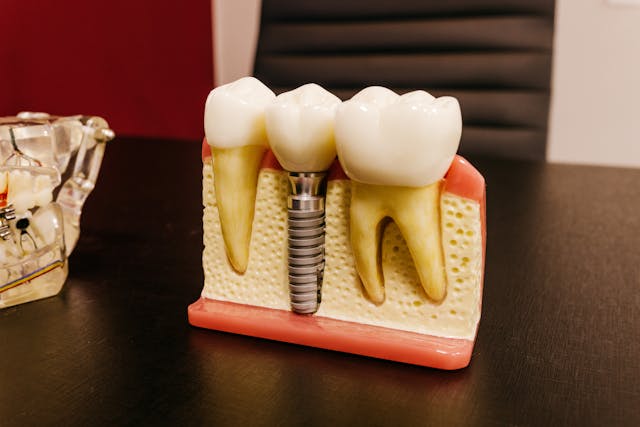
Implant fixture The titanium post surgically placed into the jawbone. It acts as an artificial tooth root and fuses with the bone over time through a process called osseointegration.
Abutment The connector piece that attaches to the top of the implant fixture and provides the platform onto which the crown is secured.
Crown The visible tooth-coloured restoration fixed onto the abutment. Custom-made to match the shape, size, and colour of your surrounding teeth.

At Eccleshill Dental, the quoted implant price from £2,095 covers all three components. When comparing this figure to other practices, always confirm whether the quote includes all three or just the fixture alone.

Additional costs that may apply in some cases and will be confirmed before treatment begins:

    • Bone grafting: If you do not have sufficient bone volume at the implant site, a bone graft may be needed before or at the time of implant placement. This is not required for every patient and will be identified through imaging at your consultation.

  • Sedation: If you would prefer to have treatment under sedation, this is available at Eccleshill Dental. The cost is separate from the implant fee and will be quoted at your consultation.
  • Initial consultation and imaging: Your consultation and any X-rays or 3D imaging required will be discussed at the time of booking.

What Affects the Cost of Dental Implants?

The starting price of £2,095 applies to a straightforward single tooth implant case in a patient with adequate bone volume. Several clinical factors affect where your case falls in terms of complexity and cost. These can only be assessed properly at a consultation and examination.

Number of Teeth Being Replaced

A single implant replaces one missing tooth. If you need multiple teeth replaced, the treatment options change. Two or more implants can support a fixed bridge, which can be more cost-effective than placing an individual implant for every missing tooth. The right approach depends on the number of teeth missing, the position of the gaps, and the condition of the surrounding bone. Our team will explain all options with clear pricing at your consultation.

Bone Volume and Whether Grafting Is Needed

When a tooth is lost, the jawbone in that area begins to shrink over time through a process called bone resorption. If bone resorption has progressed significantly, there may not be enough bone volume to securely place an implant without first building it up through a grafting procedure. Not every patient needs this, but when it is necessary it adds to the total cost and extends the timeline before implant placement can take place.

Position of the Missing Tooth

The position of the missing tooth in the mouth affects the complexity of implant placement. Molar teeth at the back of the mouth are generally more complex to place than front teeth, partly due to access and partly due to the biting forces those teeth bear. The upper jaw in the molar region can also have reduced bone height due to the proximity of the sinus, which in some cases requires an additional procedure called a sinus lift before implant placement.

Type of Crown and Materials

The crown placed on the implant is custom-made and the materials used affect both the aesthetics and the durability of the restoration. At Eccleshill Dental your dentist will discuss the most appropriate crown option for your specific tooth position and clinical situation at your consultation.

Sedation

If you are a nervous patient or would prefer to have the procedure carried out under sedation, this is available at Eccleshill Dental. Sedation adds to the overall cost but is entirely optional. Many patients who were initially anxious about the procedure find it straightforward under local anaesthetic alone.

How Does Eccleshill Dental’s Implant Price Compare to the UK Average in 2026?

Research published in 2026 from multiple sources covering private dental practices across the UK shows that a single tooth dental implant, including the fixture, abutment, and crown, typically costs between £1,800 and £4,200 nationally, with the average sitting between £2,200 and £2,500.

Practices in London and major southern city centres tend to sit at the higher end of the range, often £2,500 to £5,500 for a single tooth, due to higher commercial property and staffing costs. Practices in West Yorkshire and the wider North of England typically offer more competitive pricing for the same standard of treatment. Eccleshill Dental’s starting price of £2,095 sits within the competitive range for the region and below the national average for a complete single tooth implant.

When comparing implant prices between practices, the most important question to ask is whether the quote covers all three components (fixture, abutment, and crown) or just the implant fixture alone. Some practices advertise a lower headline price that covers only the fixture placement, with the abutment and crown quoted separately, which can add a further £800 to £1,500 to the total. At Eccleshill Dental, our quoted price from £2,095 includes all three components.

How Do Dental Implants Compare to a Dental Bridge or Denture on Cost?

When a tooth is missing there are three main replacement options: a dental implant, a dental bridge, or a denture. The upfront cost differs, but the long-term picture is more complex. Here is an honest comparison using Eccleshill Dental’s confirmed fees.

Factor Dental implant Dental bridge Partial denture
Starting cost at Eccleshill From £2,095 From £891/unit members (£1,020.51/unit private). A 3-unit bridge to replace one tooth = from £2,673 members / from £3,062 private Acrylic from £960 members / £1,200 private. Metal from £1,749 members / £2,186 private
Effect on surrounding teeth None. The implant stands independently in the jaw. The two teeth either side of the gap are drilled down to support the bridge, permanently altering healthy teeth. None directly, but relies on remaining teeth for support via clasps.
Bone preservation Yes. The implant stimulates the jawbone and prevents bone loss at the site. No. Bone continues to shrink beneath the bridge pontic over time. No. Bone continues to shrink beneath the denture.
Removable No. Fixed permanently in place. No. Fixed permanently in place. Yes. Removed for cleaning and sleeping.
Lifespan With good oral hygiene, implants can last 25 years or a lifetime. Success rates above 95% at 10 years are documented in peer-reviewed literature. Typically 10 to 15 years before replacement is needed. Typically 5 to 10 years before replacement or adjustment is needed.
Long-term cost Higher upfront cost, but a single implant may not need replacing. Lower long-term cost for many patients. Lower upfront cost initially, but replacement every 10 to 15 years and the compromise to adjacent healthy teeth. Lower upfront cost, but replacement and adjustment costs accumulate.

At Eccleshill Dental we will always explain all clinically appropriate options at your consultation with clear pricing for each, so you can make an informed decision based on your clinical situation, priorities, and budget.

How Can You Spread the Cost of Dental Implants at Eccleshill Dental?

We offer 0% APR finance on dental implant treatment, making it possible to spread the cost over monthly payments without paying any interest.

0% APR Finance

Finance is provided through Medenta Finance Limited, authorised and regulated by the Financial Conduct Authority (No: 715523). Medenta act as a credit broker, not a lender, and introduce patients to V12 Retail Finance Limited. The total you repay is exactly the quoted treatment price with no interest added. Full details are on our finance options page.

Treatment Cost Example Monthly Payment (24 months, 0% APR) Example Monthly Payment (36 months, 0% APR)
From £2,095 From £87.29 per month From £58.19 per month

These are example figures based on the starting price of £2,095 at 0% APR over 24 and 36 months respectively. Actual finance terms, available repayment periods, and eligibility will be confirmed at the time of application. Finance is subject to status. Applicant must be aged 18 or over and a UK resident.

Membership Plan

Our membership plan starts from £17.69 per month and includes routine dental examinations and hygiene appointments. The fees page shows the same implant price of £2,095 for all patients. Please ask your dentist at your consultation whether any membership plan benefit applies to your specific implant treatment cost.

Wondering what the dental implant procedure actually involves?

If you now have a clear picture of the cost and want to understand what the implant procedure itself involves, how long each stage takes, and whether it is painful, we cover all of that in our guide to dental implant treatment at Eccleshill Dental. Most patients find the procedure significantly more comfortable than they expected. The implant is placed under local anaesthetic and the vast majority of patients report minimal discomfort during the procedure itself.


Book a Dental Implant Consultation at Eccleshill Dental, Bradford

If you have a missing tooth and would like to find out whether a dental implant is the right option for you, we offer consultations at our practice at Rillington Mead, Bradford BD10 0ED. We are accepting new patients. At your consultation we will examine your teeth and jaw, carry out any imaging required, explain which treatment options are appropriate for your situation, and provide a written quote. There is no obligation to proceed.

Call us: 01274 633 406

Email: info@eccleshilldental.com

WhatsApp: 07741 503259

How Much Does Invisalign Cost in Bradford? 2026 Guide

Invisalign at Eccleshill Dental in Bradford costs from £2,895 for single arch treatment and from £3,495 for dual arch treatment. Treatment typically takes 3 to 12 months depending on your case. In this guide we explain what affects the cost, how our pricing sits within the Bradford and national context, whether Invisalign is available on the NHS (it is not for adults), and how to spread the cost using our 0% finance option.

How Much Does Invisalign Cost in Bradford - Eccleshill Dental guide

What this post covers

  • The exact Invisalign prices at Eccleshill Dental Bradford
  • What is included in the price and what affects it
  • How our pricing compares to the UK average
  • Whether Invisalign is available on the NHS
  • How to spread the cost with 0% finance
  • How Invisalign compares to fixed braces and Fastbraces on cost

What Does Invisalign Cost at Eccleshill Dental in Bradford?

At Eccleshill Dental our Invisalign pricing is transparent and confirmed below. Pricing is based on whether you are treating one arch of teeth or both.

Treatment Cost Treatment Time
Invisalign Single Arch From £2,895 Typically 3 to 12 months
Invisalign Dual Arch From £3,495 Typically 3 to 12 months

Single arch treatment straightens either the upper or the lower teeth, but not both. Dual arch treatment straightens upper and lower teeth together and is the choice most patients make when they want a complete, balanced result. If only one set of teeth needs correcting, single arch may be clinically appropriate and costs less.

These are starting prices. Your exact cost depends on the complexity of your case and will be confirmed at your consultation. You can see our full fee structure on our fees page before you book.

We offer 0% APR finance on Invisalign, allowing you to spread the cost over monthly payments with no interest added. Full details are in the finance section below.

What Is Included in the Invisalign Price at Eccleshill Dental?

When comparing Invisalign prices between practices it is important to understand what each quote actually covers. At Eccleshill Dental, the Invisalign price includes the following.

  • Initial consultation and clinical assessment to confirm suitability
  • Digital 3D scan of your teeth using intraoral scanning technology
  • ClinCheck treatment plan, a digital simulation showing how your teeth will move throughout treatment
  • All aligner sets required to complete your personalised treatment plan
  • All review appointments throughout treatment to monitor progress
  • Attachments if clinically needed, which are small tooth-coloured buttons bonded to specific teeth to help aligners move them correctly

Retainers are not included in the treatment price. Once your Invisalign treatment is complete you will need retainers to hold your teeth in their new position. Your dentist will discuss the cost of retainers at your consultation so you have a clear picture of the total investment before you commit to anything.

What Affects the Cost of Invisalign Treatment?

The prices above are starting figures. Where your specific case falls within the range depends on several clinical factors that can only be properly assessed after an examination and digital scan. Here is what actually drives the cost.

Complexity of Your Case

The most significant driver of Invisalign cost is how much your teeth need to move and in what direction. A patient with mild crowding affecting a few teeth requires fewer aligners and a shorter treatment time. A patient with more significant crowding, spacing, or bite correction needs more aligners, a longer treatment plan, and more frequent monitoring appointments. More complex cases sit higher within the pricing range.

Single Arch or Dual Arch

As described above, treating one arch costs less than treating both. Your dentist will assess whether your lower teeth, upper teeth, or both require straightening at your Invisalign consultation and recommend the appropriate option.

Treatment Duration

Longer treatments require more aligner sets and more review appointments. A case that completes in four months involves significantly less clinical work than one that runs for twelve months. The pricing reflects the total scope of treatment required, not a flat fee per aligner.

Whether Attachments Are Needed

Attachments are small composite buttons bonded to specific teeth to help the aligner apply force in the correct direction. Not every patient needs them. When they are clinically necessary they are included within the quoted treatment price at Eccleshill Dental.

How Does Eccleshill Dental’s Invisalign Price Compare to the UK Average?

Private Invisalign treatment in the UK typically ranges from £1,500 for the simplest single-tooth corrections up to £5,500 or more for complex full-arch cases. Research published in 2026 covering pricing data from over 1,100 practices across the UK found that the average cost for a full dual-arch Invisalign case sits between £3,200 and £4,500.

Eccleshill Dental’s dual arch pricing from £3,495 sits within this national average range. Practices in London and major city centres tend to sit at the higher end of this range due to higher overhead costs. Practices in West Yorkshire and the North of England generally offer more competitive pricing for the same treatment.

The lowest Invisalign prices advertised nationally often refer to the Express or i7 tier of Invisalign, which is designed for very minor corrections using seven aligners or fewer and is not suitable for most patients seeking meaningful overall improvement. When comparing quotes, always confirm which tier of Invisalign product is being quoted and what is included in the price.

Can You Get Invisalign on the NHS in Bradford?

No. Invisalign is not available on the NHS for adults in the UK. NHS orthodontic treatment covers children and teenagers who meet the clinical criteria for treatment, and the standard NHS option is fixed braces, not clear aligners.

For under-18s with significant clinical misalignment, NHS orthodontic treatment is available under Band 3 at a fixed charge that is reviewed annually by NHS England. The treatment provided is fixed braces, not Invisalign. Eligibility is determined by referral to an NHS orthodontist, not by patient choice.

Adults seeking Invisalign or any form of clear aligner treatment must pursue private treatment. There is no partial NHS contribution available for cosmetic orthodontics in adults.

How Can You Spread the Cost of Invisalign at Eccleshill Dental?

We understand that Invisalign is a significant financial commitment. We offer 0% APR finance to make the cost more manageable.

0% APR Finance

We offer 0% APR finance on Invisalign treatment through Medenta Finance Limited, who are authorised and regulated by the Financial Conduct Authority (FCA No: 715523). Medenta act as a credit broker, not a lender, and introduce patients to V12 Retail Finance Limited. This means you pay the treatment cost in monthly instalments with no interest added. Full details are available on our finance options page.

Treatment Total Cost Example Monthly Payment (24 months, 0% APR)
Invisalign Single Arch From £2,895 From £120.63 per month
Invisalign Dual Arch From £3,495 From £145.63 per month

These are example figures based on a 24-month repayment term at 0% APR. Actual finance terms, available repayment periods, and eligibility will be confirmed at the time of application. Finance is subject to status.

Membership Plan

Our membership plan starts from £17.69 per month for adults and includes two dental examinations per year, hygiene appointments, and routine X-rays. The plan gives a discount across treatments at the practice. Please ask your dentist at your Invisalign consultation whether the membership plan discount applies to your orthodontic treatment.

How Does Invisalign Compare to Fixed Braces and Fastbraces on Cost?

At Eccleshill Dental we offer Invisalign, fixed braces, and Fastbraces. We will always recommend the option that is most clinically appropriate for your teeth, not the most expensive. Here is an honest comparison to help you think through the decision.

Factor Invisalign Fixed Braces / Fastbraces
Starting cost at Eccleshill From £2,895 (single arch) / From £3,495 (dual arch) Pricing confirmed at consultation based on case complexity
UK private market range From £2,895 to £5,500+ (full cases) Typically £1,800 to £3,000 for fixed braces
Appearance during treatment Clear and virtually invisible Metal or ceramic brackets visible
Removable Yes, remove for eating and cleaning No, fixed for duration of treatment
Compliance required Must wear 20 to 22 hours daily No compliance needed, fixed in place
Comfort Smooth plastic, no wires or brackets Brackets and wire can irritate soft tissue initially
Suitability Mild to moderate cases, some complex Wide range including complex bite correction
Treatment time at Eccleshill Typically 3 to 12 months Confirmed at consultation based on case

Invisalign generally costs more than fixed braces. The additional cost reflects the invisible appearance, the ability to remove aligners for eating and cleaning, and the greater comfort of smooth plastic over metal brackets and wire. Whether that difference matters to you is a personal decision and one we are happy to talk through at your consultation.

The most important factor in any treatment decision is clinical suitability. At your consultation we will assess your teeth, explain which treatments are appropriate for your situation, and give you a clear price for each option before you commit to anything.


Does Invisalign hurt?

If you are researching the cost and also wondering what the experience actually feels like, we cover exactly what patients feel week by week in our guide Does Invisalign Hurt? What Patients Really Feel Week by Week. Most patients find it far more manageable than they expected.

Wondering how long Invisalign treatment takes?

If you have a clear picture of the cost and are now thinking about the timeline, we cover what to expect at each stage of Invisalign treatment in our guide to Invisalign treatment timelines. Most patients at Eccleshill Dental complete treatment in 6 to 12 months, but we always give a realistic estimate based on your specific case at consultation.


Book an Invisalign Consultation at Eccleshill Dental, Bradford

If you would like to find out whether Invisalign is the right option for you and get a confirmed price for your specific case, we offer consultations at our practice at Rillington Mead, Bradford BD10 0ED. We are accepting new patients and there is no obligation to proceed.

Call us: 01274 633 406

Email: info@eccleshilldental.com

WhatsApp: 07741 503259

Signs You Need a Root Canal: 7 Symptoms You Should Never Ignore

Tooth pain is one of the most difficult things to ignore, yet many people do exactly that. They hope it will settle on its own, manage it with painkillers for a few days, or put off seeing a dentist because they are worried about what they might be told.

At Eccleshill Dental in Bradford, one of the most common situations we see is a patient who has had a symptomatic tooth for weeks or months before coming in. In many of those cases, earlier treatment would have been simpler, quicker, and less costly than what became necessary by the time they arrived.

This post explains the seven symptoms that may indicate you need root canal treatment, why each one matters clinically, and what happens if an infected tooth is left without treatment. If you recognise any of these symptoms, the right next step is to book a dental examination so the tooth can be properly assessed.

Signs you need a root canal - Eccleshill Dental Bradford

What this post covers

  • What root canal treatment is, in plain language
  • Why a tooth can need root canal treatment with no obvious pain at all
  • The 7 symptoms worth taking seriously
  • What happens clinically if an infected tooth is left untreated
  • When to seek urgent care
  • What to do next if you recognise any of these signs

What is root canal treatment?

Before looking at the symptoms, it is worth understanding what root canal treatment actually involves, because much of the anxiety around it comes from misunderstanding the procedure.

Every tooth contains a soft tissue at its centre called the dental pulp. The pulp sits inside a space called the pulp chamber and extends down through narrow channels called root canals, which run to the tip of each root. The pulp contains nerves, blood vessels, and connective tissue. It plays a role in tooth development, but once a tooth is fully formed, it can function normally without it.

When bacteria penetrate deeply into a tooth, through decay, a crack, or a fracture, they can infect the dental pulp. The pulp becomes inflamed and, if left untreated, eventually dies. The infection then spreads beyond the root tip into the surrounding bone.

Root canal treatment, also called endodontic treatment, is the process of removing the infected or inflamed pulp, cleaning and disinfecting the root canal system, and sealing it to prevent re-infection. The outer structure of the tooth is preserved. Posterior teeth such as molars and premolars are usually restored with a crown afterwards to protect the weakened structure. Front teeth are often restored with a filling, depending on how much tooth structure remains.

At Eccleshill Dental, root canal treatment takes between 60 and 150 minutes and is carried out under local anaesthetic. Most patients find it far more comfortable than they expected.

Can a tooth need root canal treatment with no pain at all?

Yes, and this is one of the most important things to understand.

When the dental pulp first becomes inflamed, it typically causes pain. But if the pulp dies completely, the nerve tissue is no longer alive to transmit pain signals. The infection continues to progress and spread into the surrounding bone, but the patient may feel little or nothing during this phase.

This is why some patients come to our Bradford practice with a significant abscess visible on an X-ray but minimal current pain. The absence of pain does not mean the tooth is healthy. It may mean the nerve has died and the infection is now deeper.

Some teeth can also show changes on a dental X-ray before any symptoms develop at all. This is one reason why regular dental examinations, including X-rays, matter even when nothing feels wrong.

7 symptoms that may mean you need root canal treatment

None of these symptoms alone is a definitive diagnosis. Root canal treatment is diagnosed by a dentist following a clinical examination and X-rays. But each of the following is a signal worth taking seriously.

1. Persistent toothache that does not settle

Pain that lasts for more than a few days, particularly pain that is present without any obvious trigger, is one of the most common indicators of pulp inflammation or infection. The pain from an inflamed or infected pulp is often described as a deep, throbbing ache that can come and go or be constant. It can radiate to the jaw, ear, or nearby teeth, making it difficult to identify exactly which tooth is the source. Any toothache that persists beyond a couple of days, returns repeatedly, or cannot be explained by something obvious should be assessed by a dentist.

2. Sensitivity to heat or cold that lingers

Brief sensitivity to cold is common and not always a cause for concern. What is clinically significant is sensitivity that lingers for more than 10 to 15 seconds after the stimulus has been removed, or sensitivity to heat. When a healthy pulp is exposed to cold, the sensation passes quickly. An inflamed pulp continues to respond long after the stimulus is gone. Sensitivity to heat in particular is often associated with more advanced pulp inflammation or pulp that is beginning to die. If hot food or drink is causing pain that lingers for more than a few seconds, report it to your dentist.

3. A tooth that has become noticeably darker than those around it

A tooth that has turned grey, has a brownish tinge, or looks noticeably darker than the teeth beside it can indicate that the dental pulp is dying or has died. When the pulp breaks down, red blood cells from the dying tissue release haemoglobin, which breaks down further into iron compounds. These compounds penetrate the tiny channels inside the dentine, called dentinal tubules, and discolour the tooth from within. This discolouration develops gradually and can be easy to overlook. It is worth noting if a tooth that was previously a normal colour has changed over time. Discolouration of a single tooth is a clinical sign that a dentist needs to assess with X-rays.

4. Swelling of the gum near a specific tooth (seek care promptly)

Swelling of the gum tissue near a particular tooth, especially if it is tender to touch, can indicate that infection is spreading from the root tip into the surrounding tissue. In some cases a small raised bump or spot appears on the gum, called a sinus tract or a gum boil. A sinus tract is a channel the body has formed to allow pus from an abscess to drain. Its presence is a clear sign that active infection is present around the root. Even if the sinus tract appears to drain and temporarily resolve on its own, the underlying infection does not clear without treatment. A gum boil near any tooth should be assessed promptly.

5. A persistent bad taste or bad breath from one area

A persistent unpleasant taste in the mouth, or bad breath that remains despite good oral hygiene, can sometimes be caused by an infected tooth draining bacteria and pus into the mouth. This is particularly relevant when the bad taste or smell can be localised to a specific area rather than being general. Pus from a dental abscess has a distinct unpleasant taste. If you can trace an unusual taste or smell to one part of the mouth, especially if other symptoms on this list are also present, it warrants a dental examination.

6. Pain or discomfort when biting or applying pressure to a tooth

A tooth that is painful when you bite down on it, or that feels uncomfortable when you press on it, can indicate inflammation in the tissues surrounding the root tip. This condition is called apical periodontitis, which is inflammation of the periodontal tissue at the apex of the root. It can occur both when the pulp is severely inflamed and alive, and as infection spreads beyond a pulp that has already died. The affected tooth may feel as though it sits slightly higher than the surrounding teeth, or feel subtly different when you bite. Even occasional discomfort on biting from a specific tooth is worth checking.

7. A tooth that has already had significant dental work and is now causing problems

A tooth that has had a filling, crown, or even a previous root canal treatment can still develop problems. Decay can develop beneath an existing filling or crown and eventually reach the pulp. A previous root canal can fail if bacteria recolonise the root canal system over time, or if the final restoration did not adequately seal the tooth. If a tooth with a history of significant dental work is now causing pain, sensitivity, swelling, or any of the other symptoms on this list, it needs to be assessed. Prior treatment does not make a tooth immune to new problems.

What happens if an infected tooth is left untreated?

A tooth infection does not resolve on its own. The bacteria causing the infection do not disappear without treatment. Without intervention, an infected tooth follows a progression that becomes increasingly difficult and more expensive to manage the longer it continues.

In the early stages, infection is contained within the pulp and root canal system. Root canal treatment at this point is straightforward and has a good success rate. The tooth can usually be saved without significant complications.

As the infection progresses, it spreads through the root tip into the surrounding bone, causing a dental abscess. This stage involves more significant pain and can cause visible facial swelling. Antibiotics are often needed to bring the infection under control before definitive dental treatment can take place.

If left further still, the infection destroys surrounding bone to the point where saving the tooth becomes impossible and extraction is the only option. If a tooth needs to be extracted, it then needs to be replaced to prevent the remaining teeth from shifting. Replacement options at Eccleshill Dental include dental implants, a dental bridge, or a denture, each of which involves additional treatment and cost.

In the most severe cases, dental infections can spread into the soft tissues of the jaw, face, and neck. This is a medical emergency requiring urgent hospital treatment.

The straightforward point is this: a tooth showing early warning signs and treated promptly has a much better outcome, at lower cost and with less discomfort, than one left to deteriorate.

When to seek urgent care

If you have any of the following, do not wait for a routine appointment. Contact Eccleshill Dental on 01274 633 406, or call NHS 111 if we are closed:

  • Facial swelling that is spreading, particularly around the eye, under the jaw, or down the neck
  • Difficulty swallowing or opening your mouth
  • Difficulty breathing
  • A high temperature combined with severe dental pain

These can indicate a spreading infection that requires prompt medical attention, not just dental care.

What to do if you recognise any of these symptoms

If you have identified one or more of these symptoms, book a dental examination. A dentist cannot diagnose a tooth problem from a description of symptoms alone. The assessment requires a clinical examination, tests of the tooth’s response to stimuli, and X-rays to assess the condition of the root and surrounding bone.

Do not rely on painkillers to manage the situation long term. They can reduce the discomfort, but they do not treat the infection. A tooth infection that is masked by pain relief continues to progress.

If you are worried about what root canal treatment involves, it is worth knowing that the procedure is carried out under local anaesthetic. You should not feel pain during the treatment. The pain people associate with root canal treatment is almost always the pain caused by the infection before treatment, not the treatment itself. Many patients tell us it was far more straightforward than they expected.

Root canal treatment at Eccleshill Dental, Bradford

Root canal treatment at our Bradford practice takes between 60 and 150 minutes and starts from £549. Membership plan patients receive a 20% discount. We also offer 0% finance, allowing the cost to be spread over monthly payments.

If you are nervous about dental treatment, we offer sedation at Eccleshill Dental and our team has extensive experience in supporting anxious patients. You will not be judged for having avoided the dentist, and there is no pressure to proceed with anything until you are fully ready.

Wondering what root canal treatment actually involves?

If reading this post has raised questions about what the procedure involves, how long it takes, and whether it hurts, we cover all of that in our guide to root canal treatment at Eccleshill Dental. Most patients find it significantly more comfortable than they expected.


Book a dental examination at Eccleshill Dental, Bradford

If you have a symptomatic tooth and would like it assessed, we are accepting new patients at our Bradford practice. We offer same-day emergency appointments for patients in pain.

Root canal treatment: eccleshilldental.co.uk/treatments/general-dentistry/root-canal-treatment/

Book an appointment: eccleshilldental.co.uk/contact/

Call us: 01274 633 406

Email: info@eccleshilldental.com

WhatsApp: 07741 503259

Membership plan patients receive 20% off root canal treatment. 0% finance is also available. See our fees page for full details.

Does Invisalign Hurt? What Patients Really Feel Week by Week

One of the most common questions we hear at Eccleshill Dental when patients are considering Invisalign is a simple one: will it hurt?

It is a fair question, and you deserve a straight answer rather than reassuring language that glosses over the reality. The honest answer is that most patients experience some pressure and soreness, particularly in the first couple of days of wearing each new set of aligners. For the vast majority of patients this is mild and manageable. But the experience does vary from person to person, and understanding what to expect makes the whole process much easier.

This guide walks you through what Invisalign discomfort actually feels like, why it happens, what helps, and when you should contact your dentist.

Does Invisalign hurt - Eccleshill Dental Bradford

What this post covers

  • Why Invisalign causes discomfort and what is actually happening inside your teeth
  • What to expect in the first week, at each aligner change, and as treatment progresses
  • How Invisalign compares to fixed braces for comfort
  • What actually helps, including the correct advice on pain relief
  • When to contact your dentist

Why does Invisalign cause discomfort at all?

To understand why Invisalign causes soreness, it helps to understand what is actually happening to your teeth during treatment.

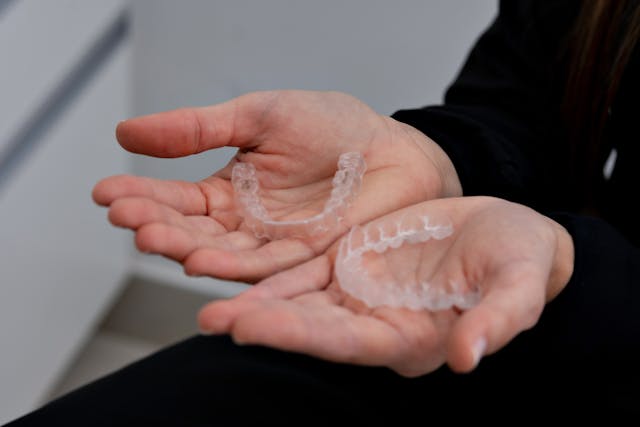
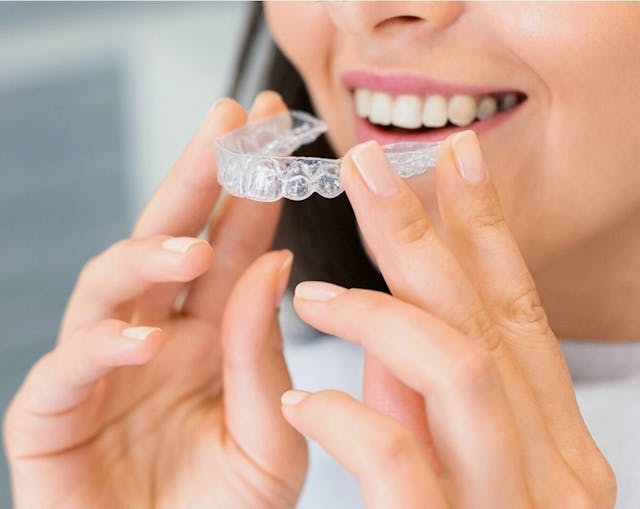
Invisalign works through a series of custom-made, removable, clear plastic trays called aligners, each of which is designed to be slightly different from your current tooth position. When you place a new set of aligners in your mouth, they do not sit perfectly flat against your teeth. They fit the position your teeth need to reach, not the position they are currently in. Your teeth need to move to match the aligner shape.

That movement happens through a process called bone remodelling. The aligner applies gentle, controlled pressure to specific teeth, which creates pressure and tension zones in the periodontal ligament, the tissue that connects each tooth root to the surrounding jawbone. In response to this pressure, specialised cells called osteoclasts break down bone on the pressure side, while osteoblasts build new bone on the tension side. This biological process is what allows your teeth to move gradually through the jaw.

The soreness you feel is a direct result of that pressure on the periodontal ligament and the early inflammatory response in the surrounding tissue. It is not damage. It is the same fundamental process that happens with all forms of orthodontic treatment, fixed braces included. The difference with Invisalign is that the force is applied in smaller, more frequent increments, which is why many patients find it more comfortable than traditional wire braces.

Is Invisalign painful when you first start?

The first week tends to produce the most noticeable discomfort. Your teeth are under orthodontic pressure for the first time, your mouth is adjusting to wearing something for 20 to 22 hours a day, and your periodontal ligament has not yet adapted to regular movement.

Here is what the majority of patients at our Bradford practice describe in the first seven days:

  • A feeling of pressure across the teeth when the aligners are first placed in, particularly on the teeth the first set of aligners is targeting
  • Mild soreness when biting down, most noticeable in the first 24 to 48 hours
  • Some awareness of the aligner edges against the inside of the lips or cheeks, which usually settles within a few days as soft tissue adapts
  • Occasionally a very slight lisp when speaking, which most patients find resolves within the first week as the tongue adjusts

What most patients do not experience: sharp pain, pain that disrupts sleep, or pain that requires anything beyond standard over-the-counter pain relief. If you are experiencing any of those, contact us.

What patients actually say

The word we hear most from patients describing the first week is ‘pressure’ rather than pain. Many describe it as similar to the feeling after an intense workout, an awareness that something is working, not that something is wrong.

Do new aligners always hurt when you change them?

Each time you move to a new set of aligners, typically every one to two weeks, you will likely notice some degree of the same pressure returning for a day or two. Each new set is again slightly ahead of your current tooth position, so the periodontal ligament experiences fresh pressure.

Most patients find that the discomfort with each successive aligner change reduces as treatment progresses. Your teeth are already in motion; the gap between where they currently sit and where the new aligner needs them to be is smaller than it was at the start.

One tip that works well for many of our patients: put your new aligners in last thing at night, just before bed. Your teeth begin adjusting during sleep, and you wake up with the worst of the pressure already behind you.

How long does Invisalign soreness last?

Soreness from each new set of aligners typically peaks in the first 24 to 48 hours and then reduces noticeably. By day three or four with a new set, most patients are no longer thinking about it.

The overall pattern across treatment tends to follow a predictable arc. The first week is usually the most uncomfortable. Weeks two to six see most patients adapting significantly, with each aligner change feeling less significant than the last. By the midpoint of treatment, many patients tell us they are surprised by how routine the process has become.

If soreness from a particular set of aligners is not improving after five to seven days, or is getting worse rather than better, mention it at your next review appointment.

What to expect week by week

Timeframe What most patients experience What helps most
Days 1-2 (first aligners) Noticeable pressure; mild soreness when biting down Paracetamol as needed; soft foods; change aligners at bedtime
Days 3-7 Pressure eases; mouth adapts to wearing aligners for 20-22 hours Gentle biting pressure on the aligner helps it seat correctly
Each new aligner change (days 1-2) Mild pressure returns for a day or two Change aligners at bedtime so the peak pressure happens during sleep
Weeks 4-6 onwards Most patients barely notice each aligner change Consistent 20-22 hour daily wear keeps treatment on track
Final set of aligners May feel noticeably tight as teeth reach their target position This is expected and normal

Is Invisalign more comfortable than fixed braces?

For most patients, yes, and there are specific reasons for this that are worth understanding before you make a treatment decision.

Fixed braces work through a wire that runs between brackets bonded to each tooth. At each appointment, the wire is tightened or adjusted. This applies a relatively sudden increase in force, concentrated on specific teeth, and the metal brackets and wire can cause rubbing and ulceration against the soft tissue inside the mouth.

Invisalign applies force more gradually. Each set of aligners moves teeth by a smaller increment than a typical brace adjustment. There are no wires, no brackets, and the aligner surface is smooth. Most patients describe fixed brace tightening as a sharper, more immediate discomfort, while Invisalign pressure feels more like a steady squeeze that fades over a few days.

That said, every patient is different, and the most important factor in any treatment decision is always clinical suitability, not comfort preference alone. At Eccleshill Dental we offer Invisalign, fixed braces, and Fastbraces, and will always advise you honestly on which is most appropriate for your teeth.

For patients who are nervous about treatment

If worry about pain or discomfort has been one of the reasons you have been putting off teeth straightening, Invisalign is one of the gentler options available. At Eccleshill Dental we also offer sedation for patients who find dental treatment difficult, and our team has extensive experience in helping anxious patients feel at ease from the moment they walk through the door. You can find out more about how we support nervous patients on our dedicated page.

What is the best pain relief to use during Invisalign?

This is worth answering carefully because the common answer, ‘take ibuprofen if it hurts’, is not the most accurate advice for Invisalign patients specifically.

Research published across multiple studies from 2004 to 2024 shows that ibuprofen and aspirin, which work by inhibiting prostaglandin synthesis, may reduce the rate of orthodontic tooth movement. Prostaglandins play a direct role in the bone remodelling process that allows teeth to move, so consistently blocking them during treatment may slow your progress. The evidence is not conclusive, and the effect appears to vary with dosage and how regularly the medication is taken, but the concern is real enough that it is worth knowing about.

Paracetamol does not carry the same concern. Unlike ibuprofen, paracetamol acts primarily on pain pathways in the central nervous system and does not function as an anti-inflammatory in the peripheral tissues. Multiple studies have found that paracetamol does not interfere with orthodontic tooth movement and is the preferred choice for managing discomfort during Invisalign treatment.

In practice this means:

  • Paracetamol taken as directed is the recommended first choice for Invisalign discomfort
  • Occasional ibuprofen use, one or two doses in the first day after an aligner change, is unlikely to have a meaningful impact on your treatment
  • Taking ibuprofen regularly throughout treatment is best avoided if possible
  • If you need pain relief consistently on most days of treatment, mention it to your dentist as this may indicate something worth checking

Practical alternatives that many patients find helpful alongside or instead of pain relief:

  • Changing aligners at bedtime so the peak pressure period happens during sleep
  • Gentle biting pressure on the aligner, pressing down with your fingertips or using an aligner seating stick, helps the aligner fit flat against the teeth and can reduce the sensation of resistance
  • Sticking to softer foods on the first day or two after each aligner change
  • Cold water drunk with aligners in can give temporary relief from soreness

When should I contact Eccleshill Dental about Invisalign discomfort?

Most Invisalign discomfort is expected and resolves without any intervention. Contact us if you notice any of the following:

  • Sharp or severe pain that does not feel like the usual pressure sensation. This is not a typical Invisalign symptom
  • Discomfort that is getting worse rather than better after the first few days with a new set of aligners. Aligners may need to be reviewed
  • One specific tooth that is significantly more painful than the others. This may indicate an underlying issue with that tooth or a fit problem
  • An aligner with a visible gap, or one that will not sit flat against the teeth. Do not try to force it into position; call us
  • Any new clicking, popping, or jaw pain during treatment. This is worth raising at your next review appointment

The honest summary

Invisalign is not pain-free. You will almost certainly feel some pressure and soreness, particularly in the early weeks and for a day or two each time you change to a new set of aligners. For most patients this is mild and manageable with paracetamol and a realistic understanding of what is normal.

What patients at Eccleshill Dental consistently tell us is that the discomfort was less than they feared before starting, and that the end result made it worthwhile. Knowing what to expect from the start makes a significant difference, which is exactly why we wrote this.

Wondering how long Invisalign treatment takes?

If you are now wondering how long Invisalign treatment actually takes, from the first consultation to the final aligner, we cover that in detail in our guide to Invisalign treatment timelines. Treatment at Eccleshill Dental typically runs from 3 to 12 months depending on complexity, and we will always give you a realistic estimate at your consultation rather than a best-case figure.


Considering Invisalign at Eccleshill Dental in Bradford?

If you would like to find out whether Invisalign is the right option for you, we offer consultations at our practice at Rillington Mead, Bradford BD10 0ED. At your consultation we will assess your teeth, explain exactly what your treatment would involve, how long it would take, and give you clear pricing with no hidden costs. There is no obligation to proceed.

We also offer 0% finance on Invisalign treatment, and our membership plan includes a discount across treatments. Visit our fees page for full pricing.

Invisalign at Eccleshill Dental: eccleshilldental.co.uk/treatments/teeth-straightening/invisalign/

Call us: 01274 633 406

Email: info@eccleshilldental.com

WhatsApp: 07741 503259


How Do Teeth Stain and How Do You Get Rid of Badly Stained Teeth?

Teeth stains are found in a variety of forms and colours, most commonly brown or yellow. Teeth discoloration is frequently the result of ingesting stained foods and beverages such as curries, pasta sauces and red wine. Tooth stains usually only need to be brushed away; as long as you keep up to your regular cleaning and dental hygiene routine, the stains should go away. Simple preventative care is brushing and flossing to get rid of badly stained teeth. 

But occasionally, discolored teeth might be the result of something else happening in the body or mouth. Dentists refer to stains that are created by objects coming into contact with your teeth as extrinsic (external) tooth stains. This kind of staining can be easily maintained by a 6 monthly scale and polish with the hygienist, more stubborn staining can be removed with an oxygenated powder known as Airflow polish treatment. Sometimes intrinsic staining can occur, this is when the staining is within the makeup of the internal layers of the tooth and can only be resolved with filling, crown or veneer intervention.  

Some possible reasons for yellow stains on teeth are as follows: 

1)  Bad dental hygiene:

Having dirty teeth and not brushing them can lead to tooth discoloration over time and a variety of other problems, including the decay of tooth enamel. Make it a point to brush your teeth twice daily. 

2)  Smoking tobacco 

In addition to many other harmful health problems, tobacco smoke discolors the teeth. Nicotine stains can appear on the front or back of the teeth and are usually yellow in color with an orange undertone.  

How Do Teeth Stain and How Do You Get Rid of Badly Stained Teeth?

3) Coffee consumption

A cup of coffee in the morning can certainly make you feel more energised, but it can also leave brown stains on your teeth afterwards. One of the most prevalent teeth stain problems is coffee stains.

4) Taking a tea break 

Compared to coffee, tea stains are much more widespread and less well-known; black teas are especially problematic for leaving stains. Green tea or fruit can also discolor your teeth leaving stubborn stains behind! 

5) Red wine consumption: 

Red wine can quickly leave your teeth with dark, reddish stains. The tanning in the wine will stick to your teeth, red wine and other alcohols have effects on your teeth that are quite like those of sugar. 

how to get rid of yellow teeth, stained teeth, dental clinic near me, Get Rid of Badly Stained Teeth

6) Older age:  

Tooth enamel naturally erodes with age, and teeth are fully developed at a relatively young age. This can readily increase the visibility of stains. As you become older, yellow staining becomes more apparent.  

7) Tooth decay

Tooth decay can result in dark, black stains, making it potentially the most dangerous cause of stained teeth. Tooth pulp necrosis is a disorder that can cause excruciating pain if a tooth decays and dies. A small black or brown spot on your tooth is often an early cavity, and if left untreated it may lead to infection that requires root canal treatment. If you’re unsure whether your symptoms indicate a deeper issue, read our guide on signs you need a root canal.

8) Black tartar

This is the result of bacterial accumulation along the gum line. It is caused by very heavy black stains at the tooth’s upper border, close to the gum, and can spread to the remainder of the tooth.

How Do Teeth Stain and How Do You Get Rid of Badly Stained Teeth?, dentist in bradford taking new patients

9) Diseases and infections 

In rare instances, stains on the teeth may be a result from a problem other than dental decay, such as a viral infection. Chemotherapy is one treatment that might discolor teeth when used to treat malignancies of the mouth or neck. 

Read More: Tips and Tricks to Take Care of Dental Implants

Types of Teeth Stains 

Ever wondered why your teeth sometimes look more like a stained coffee cup than pearly whites? Well, there are various types of teeth stains that can dull your smile. Understanding what causes these stains is the first step towards getting rid of them. 

1) Surface Stains:

These are the most common type of stains and occur on the outer layer of the tooth, known as the enamel. Surface stains can be caused by consuming dark-colored foods and drinks such as coffee, tea, red wine, and dark fizzy drinks. 

2) Intrinsic Stains:  

Unlike surface stains, intrinsic stains occur within the tooth’s structure. They can be caused by factors such as trauma to the tooth, excessive fluoride exposure during childhood, or certain medications like tetracycline antibiotics. 

3) Age-Related Stains: 

As we age, our enamel naturally wears down, revealing the yellowish dentine underneath. This can result in a duller, more yellow appearance to the teeth. 

Also Read: Restore your smile with dental implants

dirty teeth , stained teeth, dental clinic near me, dental hygienist bradford, teeth whitening bradford , Get Rid of Badly Stained Teeth

How to Get Rid of Badly Stained Teeth/ Yellow Teeth

Having brown stains on the teeth might be concerning, particularly for those who dislike visiting the dentist and wonder how to get rid of stains on teeth. Fortunately, stain removal is typically an easy procedure that causes no pain at all! While some methods of removing discolored teeth can be done at home with ease and safety, others call for a trip to the dentist.

Some techniques to remove stains from teeth are as follows: 

1) Use whitening toothpaste

A lot of toothpastes contain baking soda, also known as sodium bicarbonate, which helps dissolve stains. Although baking soda is a powerful ingredient, this kind of toothpaste only employs a tiny bit of it. These products can sometimes be quite abrasive and may cause more harm than good. Professional tooth whitening is another option. 

2) Improve your oral hygiene 

You can stop the progression of caries if you have early-stage tooth decay, which could make stains look less noticeable. Reducing the likelihood of developing black tartar can also be achieved with improved cleaning and hygiene practices. 

how to get rid of stains on teeth, yellow stains on teeth, remove stains from teeth, bad yellow teeth, dental clinic near me

3) Keep gum or mints on hand:  

Both chewing gum and strong mints can help remove stains from teeth and improve breath quality. You can carry a tiny pack of mints or gum (sugar free) in your pocket or bag.

4) Restorative dentistry 

This may be the best course of action for stained teeth caused by tooth decay. Root canal therapy, white fillings, crowns or veneers are available options. Cosmetically driven treatments are a good way to improve your smile. Treatments such as teeth whitening, veneers, or orthodontic solutions like Invisalign can help transform the appearance of your teeth. If you’re considering clear aligners, you may also want to learn whether Invisalign hurts and what to expect during treatment.

A dentist’s expert cleaning can help even the worst-stained teeth. Teeth can look better if plaque and tartar are removed with specialised instruments, especially if there are yellow stains. Stains on the surface of the enamel can also be effectively removed by polishing during a dental cleaning. 

Read More: Guide on Dental Sedation

dentist in bradford taking new patients, dental clinic near me, dental hygienist bradford, teeth whitening bradford, Teeth Stain, How Do You Get Rid of Badly Stained Teeth

Teeth Stain Remover: No More Brown Stains on Teeth 

how to get rid of yellow teeth, dental clinic near me, teeth whitening bradford, airflow stain removal, dental hygienist bradford, dentist in bradford taking new patients, Get Rid of Badly Stained Teeth

Say goodbye to those bad yellow teeth with our range of effective teeth stain removers. Whether you prefer in-house treatments or at-home solutions, we have options to suit every need and budget. 

Take-Home Whitening Kits: 

The convenience of whitening your teeth at home has mutliple benefits. We offer take-home whitening kits that are safe, effective, and extremely easy to use. Simply follow the instructions provided and watch as your teeth become several shades whiter. 

Looking to get rid of those bad yellow teeth? Look no further! Schedule your teeth whitening appointment at Eccleshill Dental today and experience the difference. Say goodbye to stains and hello to a radiant smile with teeth whitening Bradford. 

Dental Clinic Near Me: Your Smile Deserves the Best 

When it comes to your oral health, don’t settle for anything less than the best. At Eccleshill Dental, we are committed to providing our patients with the highest quality dental care in a warm and welcoming environment. 

Dentist in Bradford Taking New Patients: Visit Our Dental Family Today 

If you’re looking for a dentist in Bradford who is currently accepting new patients, look no further than Eccleshill Dental. Our experienced team are dedicated to helping you achieve a healthy, beautiful smile that you can be proud of. 

Dental Hygienist Bradford: Keep Your Smile Bright and Healthy 

Regular visits to our dental hygienist are essential for maintaining good oral health and preventing teeth stains. Our hygienists will thoroughly clean your teeth, removing plaque and tartar buildup to keep your smile looking its best, also offering thorough Oral Health guidance to keep your teeth healthy at home in between visits.  

Conclusion: Remove Stains from Teeth and Reveal Your Best Smile 

Don’t let stained teeth hold you back from smiling with confidence. With the help of Eccleshill Dental, you can remove stains from teeth and reveal your best smile yet. Whether you opt for professional teeth whitening treatments, airflow stain removal or good old-fashioned oral hygiene, we have the solutions you need to achieve a brighter, more beautiful smile.  

Schedule an appointment with us today and take the first step towards a healthier, happier smile. 

Teeth Stain Remove at Eccleshill Dental

Gum Abscesses and Gum Boils – Causes, Symptoms, and Treatment Options

Sudden gum pain or swelling can be alarming, especially when it appears overnight. At Eccleshill Dental Bradford, one of the most common urgent problems we treat is a gum abscess, often described by patients as a “gum boil.” While painful, these infections can be treated safely and effectively with timely professional care.
As a private dentist Bradford residents trust, we regularly help patients manage urgent gum infections while protecting their long-term gum health.


What Is a Gum Abscess?

A gum abscess is a bacterial infection that leads to a pocket of pus forming within the dental gum. It often appears as a swollen, tender lump and may cause a bad taste if it drains.
Types of Gum Abscesses
● Gingival abscess – affects surface gum tissue, commonly due to trapped food

● Periodontal abscess – develops deeper near the tooth root, often linked to underlying gum diseaseRed, tender gums

What Causes a Gum Abscess?

Common causes include:
● Poor oral hygiene and plaque buildup

● Food debris trapped under the gum

● Injury to the gum tissue

● Complications after dental treatment

● Untreated gum disease

While many patients try gum disease treatment at home, professional care is essential once infection develops.

Signs and Symptoms of a Gum AbscessPainful swelling or gum boil
● Painful swelling or gum boil

● Red, tender gums

● Throbbing pain spreading to jaw or ear

● Bad breath or unpleasant taste

● Sensitivity when chewing

● Fever in more serious cases

Even if pain reduces suddenly, the infection may still be present.

Gum Boil vs Tooth Abscess
● Gum abscess: Starts in the gum tissue

● Tooth abscess: Begins inside the tooth pulp

A clinical exam at a trusted dental clinic is the only way to confirm the cause and choose the right treatment for gums.

How Dentists Treat Gum Abscesses?

Dental Practice At Eccleshill

At Eccleshill Dental Practice – our treatment include:

1. Draining the infection

2. Deep cleaning of the gum area

3. Antibiotics when necessary

4. Treating any underlying gum disease

5. Follow-up care to prevent recurrence

Patients searching for the best dental clinic near me often choose us for our calm approach and clear communication.


Also Read – How To Find The Right Dental Practice For You.


Can a Gum Abscess Heal on Its Own?

No. Gum abscesses do not fully heal without professional treatment. Delaying care increases the risk of infection spreading to nearby teeth or bone.
If you’re reading Bradford urgent dental centre reviews and looking for urgent care, early treatment is always the safest option.

What You Can Do While Waiting for an Appointment

● Rinse gently with warm saltwater

● Use over-the-counter pain relief if suitable

● Avoid pressing or popping the abscess

● Keep the area clean with gentle brushing

These steps can help comfort, but they are not a replacement for dental treatment.


Also Read – Periodontal (Gum) Disease – Causes, Symptoms, and Long-Term Treatment.


When Should You See a Dentist Urgently?

● Persistent swelling or pain

● Fever alongside gum infection

● Pus discharge

● Loose teeth

As a dentist in Bradford taking new patients, we offer timely care for urgent gum problems.

 Gum Health Support

If you’re experiencing a gum abscess or recurring gum infections, professional care is essential.
Learn more about our dental hygiene and gum health treatments here:

👉Explore our gum health and hygiene treatments: Visit HERE

12 Subtle Signs You’re Overdue for a Dental Checkup

You might think, “If there’s no pain, everything’s fine,” but your mouth can whisper warnings long before pain screams. Skipping regular dental checkups is one of the easiest ways to let minor issues grow into major ones. Below are twelve subtle signs your teeth (and gums) may be quietly signaling: it’s time for a dental checkup.

Even if you live in Bradford or are searching for a “dental checkup near me,” these signs apply. This post aims to help you catch problems early and get you back into the dentist’s chair before things worsen.

1. Your Gums Bleed with Gentle Flossing or Brushing

Bleeding gums doesn’t always mean you are doing something aggressively wrong. Often, they’re the first hint of gingivitis — the mild, reversible form of gum disease. If flossing or brushing gently (not aggressively) causes your gums to bleed on a regular basis, that’s your mouth asking for a professional exam and deep cleaning.

Why this matters: untreated gum disease may progress and threaten underlying bone and overall oral health.

2. Persistent Bad Breath That Doesn’t Agree with Mouthwash

We all get occasional bad breath, especially after garlic or onions. But when foul odor lingers, even after brushing, flossing, and rinsing, it could suggest bacterial buildup below the gum line, decayed areas, or hidden pockets of infection.

If “minty gum + strong mouthwash” still doesn’t mask persistent bad breath, it’s a red flag to schedule a dental checkup near me.

3. Teeth Feel Slightly Rough or Gritty Later in the Day

Dental Checkup at Eccleshill Dental Bradford 2

Your teeth should feel relatively smooth when you run your tongue over them. If you start noticing rough spots, uneven texture, or gritty residue even after brushing, plaque may have hardened into tartar (calculus).

Tartar is stubborn and can’t be removed by brushing alone. Only a professional cleaning during a dental checkup can safely remove it.

4. You Spot Faint Discoloration or Pale Spots

Sometimes early decay doesn’t hurt, it shows subtly. Tiny white spots, faint grayish patches, or slightly yellowed edges could all hint at demineralization or enamel wearing. These are early signals that some action is required, before cavities deepen.

A dental checkup helps your dentist detect and possibly reverse early decay before a full cavity develops.

5. Teeth Start Sensitivity to Hot, Cold or Sweets

A little “zing” when sipping hot coffee or biting into ice cream now and then isn’t unusual. But when sensitivity becomes more frequent and bothersome, even for mild temperature changes — that’s a sign the protective enamel is thinning or gums are receding.

Even though discomfort may come and go, it’s a subtle warning. In a checkup, your dentist can assess the cause — be it enamel erosion, exposed dentin, or cracks and suggest protective treatments.

Also Read: Top 9 Tips for Brushing Your Child’s Teeth the Right Way

6. You’ve Gone More Than Six Months (or Longer) Since Last Visit

Sometimes the biggest “sign” is simply neglect. The standard recommendation of a dental checkup every six months is not arbitrary — it balances prevention, monitoring, and cost.

If you realize it’s been a year (or more) since your last professional cleaning and exam, that alone is enough reason to get back on schedule.

7. Minor Jaw or Mouth Discomfort That Comes & Goes

You may notice a slight sensation of pain around your jaw, a bit of clicking when you open your mouth, slight achiness near a tooth once in a while, or have a feeling of “tightness” when you chew. While you may brush it aside as exhaustion or stress, these may be early signals of TMJ strain, grinding (bruxism), or bite misalignment.

A dental checkup gives your dentist a chance to evaluate your bite, muscle tension, and joint health before the issue escalates.

8. Slight Shifting or Looseness in Teeth

Maybe you have noticed that a tooth “feels different” just slightly loose, or that its neighbors feel a bit closer (or farther) than before. Changes often occur so gradually you don’t see them daily.

Such movement can stem from bone loss, periodontal disease, or trauma. Scheduling a dental checkup Bradford (if you are local) can help catch early bone or gum issues and preserve stability.

9. You Find Tiny Cracks or Chips

You don’t need to wait for a dramatic break. Tiny hairline cracks, fine lines, or micro-chipping on enamel are subtle structural signs that your teeth are under stress.

Such cracks can harbor bacteria, worsen over time, or lead to further fractures. Your dentist can spot them via examination or x-rays before they become bigger problems.

10. You Notice More Plaque or Stains Than Usual

If you notice more yellowing, or a higher buildup of deposits than before, the environment in your mouth is changing. For example, your saliva flow may have decreased, your diet changed, or your oral hygiene of brushing and/or flossing may have decreased in effectiveness.

You can completely reset your clean state with a professional scale and polish at your dental checkup, and your dentist can help advise you on making adjustments to your home routine.

11. Dry Mouth, Burning Sensation, or Unusual Taste

Chronic dry mouth (xerostomia) reduces saliva’s natural cleansing effect, leaving teeth vulnerable. You might also experience a burning tongue sensation, metallic taste, or odd mouth dryness.

These can arise from medications, systemic conditions, or dehydration but they also heighten risk for decay, infections, and gum disease. A dental checkup helps uncover underlying causes and protective strategies (e.g. fluoride gels, habit changes).

12. You Often “Forget” Toothaches or Carry Minor Discomfort

Maybe your tooth “feels off” sometimes but not enough to make you pick up the phone. Or you have learned to live with a minor ache, pinching or twinge. That’s dangerous — what starts as a whisper may become a roar (root canal, abscess).

If you find yourself ignoring small sensitivities, or telling yourself “It’ll go away,” that’s a sign: you’re overdue. Don’t wait for a bad flare-up.

Also Read: How Often Should You Really Get a Dental Checkup? Here’s What Dentists Recommend

Why Being “Overdue” Is Riskier Than You Think

Being overdue for a dental checkup is more than just neglecting your teeth. It invites:

  • Progression of decay: what started as faint demineralization can escalate into deep cavities or root problems.

  • Gum disease advancing: gingivitis can become periodontitis, causing bone loss, receding gums, and loose teeth.

  • Higher cost and complexity: early detection often means simpler, more affordable treatments.

  • Systemic health implications: oral infections influence heart health, diabetes, and more.

  • Comfort and quality of life issues: chewing becomes harder, sensitivity grows, and infections can cause swelling, pain, or abscess.

That’s why these subtle clues matter — because they give you a head start.

What to Expect in a Dental Checkup (So You Don’t Sweat the Unknown)

Dental Checkup at Eccleshill Dental Bradford 3

If it’s been a while, here’s what typically happens, so you know what to expect and approach your appointment with confidence:

  1. History and Conversation
    The dentist/hygienist will review your medical/dental history, medications, habits (smoking, grinding), and any concerns you may have.

  2. Visual and Tactile Exam
    They’ll take a look at your teeth, gums, tongue, cheeks, palace, and joints, searching for signs of inflammation, lesions, mobility, cracks, and abnormalities.

  3. X‑rays or Imaging (If Needed)
    To check for hidden decay, bone levels, root structures, and inter-proximal problems.

  4. Periodontal (Gum) Assessment
    Symptoms of periodontal disease will be assessed by measuring gum pocket depths.

  5. Cleaning / Scale & Polish
    Removal of plaque, tartar (even below the gumline), polishing to smooth surfaces, and possibly fluoride treatment to strengthen enamel.

  6. Discussion & Plan
    Based on findings, the dentist discusses your oral health status, treatment needs (if any), and preventive advice tailored to you.

  7. Preventive Advice & Follow-Up
    Suggestions may include improved home-care techniques, diet tweaks, fluoride products, night guards (if grinding), or scheduling the next checkup.

Know more: How Diet Affects Your Child’s Teeth: Foods to Embrace and Avoid

Tips to Stay on Track After Your Checkup

  • Set your next appointment right away. Don’t wait — book it before you leave the clinic.

  • Use reminders or calendar alerts. Six months can pass quickly.

  • Share the “why” with family or friends. Evangelize the value of preventive visits.

  • Track your own subtle symptoms. Keep a journal (gum bleeding, sensitivity, etc.).

  • Maintain good habits at home. Brush twice daily with fluoride toothpaste, floss daily, reduce sugary foods/drinks, and avoid tobacco.

For Residents Searching “Dental Checkup Near Me” or in Bradford

If you are in or near Bradford and searching “dental checkup Bradford” or “dental checkup near me,” now you know exactly what to look for: a clinic that doesn’t just clean and fix, but watches for the subtle whispers your mouth makes. Choose a dentist who treats prevention as seriously as treatments.

Final Thoughts

Your mouth doesn’t always shout when it’s in trouble. Often, it leaves soft clues — bleeding gums, sensitivity, slight roughness — waiting for you to pay attention. Recognizing those 12 subtle signs is your first line of defense.

Don’t wait for pain to force your hand. Be proactive. If you relate to even a few of the signs above, it’s time to book that dental checkup near you.

Ecceshill Dental is committed to helping patients catch issues early, maintain healthy smiles, and ensure that visiting the dentist isn’t a source of anxiety but a source of confidence.

Call us today or book your appointment — let us help keep your smile strong and problem-free.